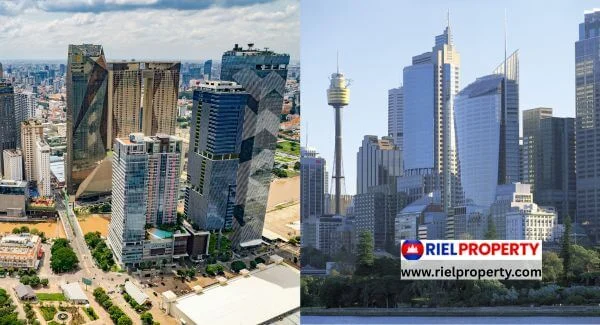
Australian and New Zealand property investors have quietly been building one of the more interesting case studies in cross-border real estate over the past decade. While their home markets have produced extraordinary wealth on paper, they have also produced extraordinary barriers to entry. Median house prices in Sydney and Melbourne now sit firmly in the high six to seven figures. Rental yields in major Australian cities have compressed to the point where the income case for property investment barely survives a basic spreadsheet analysis. And for most working Australians, the prospect of a second investment property at home has shifted from ambitious to unrealistic.
Cambodia has become part of the answer for a growing number of buyers from both countries, not as a speculative punt on an unknown frontier market, but as a considered allocation into a dollar-denominated, legally accessible, yield-positive asset class that happens to sit within a nine-hour flight of Sydney and under seven hours from Perth. The fundamentals are solid. The legal framework works. And the numbers, compared with what the same capital would achieve at home, are difficult to argue with.
At a Glance: Cambodia vs. Australia
| Factor | Cambodia | Australia |
|---|---|---|
| Entry Price | From ~$45,000 USD | $550,000+ AUD |
| Gross Rental Yield | 6–8% (up to 12% coastal) | 2.5–3.5% |
| Transaction Currency | US Dollar (USD) | Australian Dollar (AUD) |
| Foreign Ownership | Freehold strata title (legal) | Restricted for non-residents |
| Flight Time from Sydney | ~9–10 hours (via hub) | — |
| Monthly Living Cost (expat) | $1,200–$2,000 USD | $4,000+ AUD |
Jump to: The Numbers | Ownership Rules | Where to Buy | Risks | FAQ | Current Listings
The Financial Case: What the Numbers Actually Look Like
Start with entry pricing. Central Phnom Penh condominiums are currently priced between $1,600 and $3,000 USD per square metre, depending on the district, developer, and specifications. A well-located one-bedroom apartment in an established central district can be purchased for $100,000 to $250,000 USD. That is not a distressed-market price or a compromise product. It is a fully finished, freehold condominium in the capital city of a country with mid-single-digit GDP growth, a recovering tourism sector, and a deepening expatriate rental market.
The same capital deployed in Sydney or Melbourne buys a parking space, a partial share in a syndicate, or a very modest entry into the most peripheral suburban markets. For investors seeking a complete, titled, rentable asset, Cambodia offers something Australia and New Zealand cannot match at this price point.
On rental income, the gap is equally stark. Phnom Penh condominium yields an average 6.5% to 6.8% gross in 2025, with some projects and unit configurations reaching 8% to 10%. Sihanoukville’s coastal market, in well-managed beachfront developments, is projecting 8% to 12% for investors entering at current recovery-stage pricing. Compare that with typical gross yields of 2.5% to 3.5% in Sydney and Melbourne, and the income arithmetic changes entirely.
| Market | Avg. Gross Rental Yield | Avg. Price per sqm (central) | 1BR Entry Price (approx.) |
|---|---|---|---|
| Sydney | 2.5–3.0% | $12,000–$18,000+ | $700,000+ |
| Melbourne | 2.5–3.5% | $9,000–$14,000 | $550,000+ |
| Auckland | 2.5–3.5% | $8,000–$12,000 | $500,000+ |
| Bangkok | 4–5% | $4,000–$8,000 | $180,000+ |
| Phnom Penh (BKK1) | 6–8% | $2,650–$3,000 | From $130,000 |
| Phnom Penh (BKK3 / central) | 6–8% | $1,600–$2,200 | From $60,000 |
| Sihanoukville (beachfront) | 8–12% (projected) | $1,200–$2,200 | From $40,000 |
The Economic Backdrop: Why Cambodia’s Trajectory Supports Investment
Cambodia is not a static emerging market story. The World Bank projects mid-single-digit annual GDP growth in the coming years, supported by a recovering tourism sector, expanding manufacturing and exports, and growing inward foreign investment. Cambodia welcomed approximately 6.7 million international tourists in 2024, roughly matching pre-pandemic 2019 levels, which underlines both the recovery trajectory and the sustained demand base for the country’s hospitality and short-stay rental markets.
The economy operates primarily in US dollars, which removes a layer of currency complexity that complicates investment in most other emerging markets in the region. For Australian and New Zealand investors who hold USD alongside AUD or NZD, this structure makes returns straightforward to model. Rental income, property valuations, and resale proceeds are all denominated in a globally stable currency.
The capital gains tax framework adds a dimension worth noting. Cambodia introduced a capital gains tax regime, with a phased implementation window. Investors who position themselves correctly and transact within that window can structure their investment with a clearer picture of the tax position than is available in many comparable markets. A qualified local tax adviser should be consulted, but the framework itself is more transparent than it was five years ago.
What Australian and New Zealand Buyers Actually Need to Know About Ownership
The most common first question from Australian buyers is straightforward: Can I actually own this? The answer, for condominiums, is yes. Under Cambodia’s strata title system, introduced by the 2010 foreign ownership law, Australians and New Zealanders can hold freehold title to condominium units, provided those units are above the ground floor, and the total foreign ownership in the building does not exceed 70% of the total floor area. The title structure is conceptually comparable to apartment ownership in Australia, where the buyer holds a registered hard title to their specific unit.
What foreigners cannot do is own land directly in their own name. Villas, shophouses, and landed property require different legal structures, typically long-term leases or company arrangements, that carry a different risk profile and require specialist legal advice. For most Australian investors approaching Cambodia as a yield and diversification play, the clean strata title condominium route is the appropriate and most straightforward path.
Buying property does not automatically confer permanent residency or citizenship. Still, Cambodia offers renewable long-term visas, including business visas and retirement visas for those aged 55 and over, that allow full-time or part-time residence without the complexity of formal immigration programmes. For retirees or digital nomads planning extended stays, the visa flexibility is a practical advantage that other regional destinations, including Thailand and Vietnam, do not match as easily.
Where Australian and New Zealand Buyers Are Focusing
BKK1, Phnom Penh: The Prime Address
BKK1 is Phnom Penh’s established international district. Embassies, international schools, premium restaurants, co-working spaces, and the city’s highest concentration of foreign professionals are all based here. Rental demand is deep and consistent. The tenant pool includes senior expatriates, diplomatic staff, international NGO workers, and business executives, all of whom pay market rates and expect quality. Property prices are at the upper end of the Phnom Penh range, at $2,650 to $3,000 per square metre for premium developments. Still, the liquidity and rental consistency that come with the address justifies the premium for buyers focused on long-term performance.
Le Condé 2 is the flagship luxury offering in this district currently available through Riel Property. A 60-storey tower in the heart of BKK1, it represents the top end of the Phnom Penh condominium market and the strongest long-term resale and rental proposition for investors who want a premium asset in the capital’s most liquid address. For Australians seeking the Cambodian equivalent of an inner-Sydney investment-grade apartment, this is the closest comparison available.
Time Square 9 (Gatsby) brings the proven Megakim World Corp delivery track record directly into BKK1, offering the brand reliability of a developer who has been completing and handing over towers since 2017 in the district that commands the city’s strongest rental demand.
BKK3 and Central Chamkarmon: The Value Investor’s District
For buyers where capital allocation efficiency matters as much as address prestige, BKK3 and the broader Chamkarmon district offer central Phnom Penh positioning at meaningfully lower price points than BKK1. The neighbourhood borders BKK1 directly, shares much of its amenity infrastructure, and benefits from the same underlying demand drivers, but with newer development stock at entry prices, opening the market to a wider range of investors.
Time Square 11 is the standout current opportunity in this district. A 39-floor premium tower from Megakim World Corp, with fully furnished freehold units starting from approximately $45,000, a 35-month staged payment plan requiring just 20% at contract, and a June 2029 completion timeline. For an Australian investor putting $45,000 to $100,000 into a Cambodia allocation as part of a diversified portfolio, this is the kind of proposition that makes the numbers work at multiple budget levels. More than 60% of units across the active Time Square portfolio are already committed, and BKK3’s proximity to the Russian Market area gives it additional expat community infrastructure that supports tenant demand.
Sihanoukville: Coastal Yield and Lifestyle Value
Sihanoukville is a different proposition from Phnom Penh, with a different buyer profile and a different investment thesis. The coastal city underwent a dramatic Chinese capital-driven development cycle between 2016 and 2019, followed by oversupply, COVID-related disruption, and a market correction. What that correction has produced is a coastline with genuine lifestyle credentials, recovering tourism, infrastructure improvements, including an upgraded coastal expressway, and property prices reset to historically competitive levels.
For Australian buyers who want beach access, holiday rental income, and the option of personal use alongside investment returns, the entry point is compelling. Time Square 10 on Otres Beach offers beachfront condominiums from approximately $40,000, with projected gross yields of 8% to 10% for well-managed properties targeting the recovering tourism and expat markets. Over 70% of units sold within weeks of launch, from the same developer whose completion record across Phnom Penh eliminates the usual concerns about off-plan delivery risk.
Four Types of Australian and New Zealand Buyers Currently Active in Cambodia
| Buyer Profile | Primary Motivation | Typical Budget | Preferred Location |
|---|---|---|---|
| Yield Investor | Rental income, portfolio diversification | $80,000–$250,000 USD | BKK1, BKK3, central Phnom Penh |
| Retiree / Lifestyle Buyer | Lower cost of living, warm climate, relaxed pace | $100,000–$300,000 USD | Central Phnom Penh, Sihanoukville |
| Digital Nomad | Visa flexibility, low living costs, Asia hub | $45,000–$120,000 USD | BKK3, Toul Kork, central districts |
| Entrepreneur / Business Owner | ASEAN base, lower operating costs, asset building | $150,000–$500,000+ USD | BKK1, Riverside, commercial districts |
The Cost of Living Advantage
For retirees and lifestyle buyers in particular, the cost of living comparison deserves careful attention. A comfortable expatriate lifestyle in Phnom Penh, including a well-located apartment, regular dining out, private healthcare, domestic help, and regional travel, typically costs between $1,200 and $2,000 USD per month. An equivalent standard of living in Sydney or Melbourne would require several thousand dollars more per month in basic living costs alone, before accounting for property costs.
For a 65-year-old Australian with superannuation and modest additional savings, the arithmetic of retiring in Cambodia versus remaining in Australia is genuinely transformative. The same monthly budget that creates financial stress in a major Australian city supports a comfortable, socially active life in central Phnom Penh, with warm weather, widespread English proficiency, a well-established expatriate community, and reasonable access to private healthcare facilities.
Honest Assessment of the Risks
Cambodia is an emerging market, and the risks that come with that classification are real and should not be minimised. Price volatility is higher than in mature markets. Certain condominium segments have experienced oversupply-driven price corrections in the past, and the same conditions could recur in districts where developer supply outpaces tenant demand. Buyers should approach the market with a medium to long-term holding mindset, not an expectation of short-term liquidity.
Developer quality varies considerably. Some builders have strong completion records and deliver on specification. Others have faced delays, quality shortfalls, or more serious financial difficulties. Due diligence on a developer’s previous completed projects, their current construction progress across the portfolio, and their financial standing is not optional in this market. It is the difference between a clean investment and a costly mistake.
Selling a Cambodian condominium takes longer than selling an Australian apartment. Secondary market liquidity is improving but remains limited compared with developed-market norms. Buyers should assume a minimum holding period of three to five years and plan accordingly.
None of these risks is a reason to avoid the market. There are reasons to approach it correctly, with the right information, the right developer selection, and the right professional support.
Frequently Asked Questions from Australian and New Zealand Buyers
Can Australians buy property in Cambodia?
Yes. Australians and New Zealanders can own condominiums under the strata title framework, provided units are above the ground floor and within the 70% foreign ownership quota. Direct land ownership is not permitted for foreign nationals.
Do I need to be in Cambodia to buy?
No. Most of the purchase process can be completed remotely through a combination of Power of Attorney arrangements, digital document workflows, and on-the-ground support from a professional agency. Many Australian buyers complete their purchase without visiting Cambodia until handover.
What taxes apply?
A property transfer tax applies at purchase. Rental income is subject to Cambodian tax. A capital gains tax framework has been phased in. The precise tax position depends on ownership structure, residency status, and the applicable double-taxation agreement between Australia and Cambodia. Independent tax advice is essential before committing.
Can I get a mortgage in Cambodia?
Local bank financing for foreign nationals is limited. Most international buyers use developer instalment plans, which spread payments across the construction period, or fund purchases from existing capital. Some developers offer structured deferred payment arrangements that effectively serve a similar function to a short-term construction loan.
What yields can I realistically expect net of costs?
Gross yields in Phnom Penh average 6.5% to 6.8%. After accounting for management fees, maintenance, vacancy periods, and applicable taxes, net yields typically fall by 1.5% to 2% below gross yields. A well-managed unit in a quality building in a strong rental district can realistically target net yields in the 4.5%-6% range, which remains materially above what Australian investors achieve at home.
How far is Cambodia from Australia?
Phnom Penh is reachable from Perth in approximately seven hours and from Sydney or Melbourne in under nine to ten hours via regional hubs. For buyers who make regular visits or plan to relocate, the travel time is practical rather than prohibitive.
Buying Property in Cambodia from Australia or New Zealand
The logistics of buying from the other side of the world are more straightforward than most first-time buyers expect, provided the right support is in place. Riel Property is built specifically around this buyer profile: international investors who want clear, structured project data and reliable execution from a team that stays involved after the purchase is complete.
The process begins with structured research. Every project listed on Riel Property is presented with full investment data, including completion timelines, unit mix, price per square metre, ownership eligibility, yield framing, and developer track record context. This is the information that overseas buyers need to make a considered decision, not brochure copy designed to rush a commitment.
Once a buyer has shortlisted a project, Riel Property advises on unit selection within the building, covering floor, stack, view corridor, potential noise factors, and any known obstruction risks. These details affect rental performance and resale value in ways that matter to long-term returns but are rarely covered in developer marketing material.
From shortlist to purchase, the transaction is coordinated with trusted local professionals, including legal title verification, ownership registration, and payment schedule management. For buyers completing remotely, Power of Attorney arrangements are available. Regular construction progress updates are provided through to handover, at which point Riel Property coordinates the snagging process, furniture installation, and tenant placement for owners who are not physically present in Cambodia.
The after-sales support, which includes lettings, ongoing maintenance coordination, and ownership reporting, is the part of the service that most distinguishes Riel Property from the standard agency model. Most developers and agents focus on closing the sale. Riel Property’s model is built on long-term owner success because that is what generates repeat business and referrals from buyers who are satisfied with their Cambodia investment years after signing the contract.
Current Listings Across the Market: Entry, Mid, and Premium
For Australian and New Zealand buyers at different budget levels, Riel Property currently lists projects across the full spectrum of the Cambodia condominium market:
- Entry level: Time Square 10, Sihanoukville, from approximately $40,000, beachfront freehold condominiums with 8–10% projected yields.
- Mid-market central Phnom Penh: Time Square 11, BKK3, from approximately $45,000, fully furnished freehold high-rise with a 35-month staged payment plan, targeting 6–8% rental yields in the heart of Chamkarmon.
- Premium BKK1: Time Square 9 (Gatsby), BKK1, in Phnom Penh’s most established international district, combining proven developer delivery with the city’s strongest rental demand.
- Luxury segment: Le Condé 2, BKK1, a 60-storey landmark tower at the top of the Phnom Penh market, for investors seeking the capital’s premier address and strongest long-term resale liquidity.
Each of these projects is available to research in full at Riel Property, with structured investment data, developer verification context, and direct access to a team that can guide Australian and New Zealand buyers through every stage of the process, from initial enquiry to occupied, income-generating ownership.

Thomas Kaspersky
I’m Thomas Kaspersky, specialising in property investment across several markets, including Cambodia, the UK, Dubai/UAE, and Poland. With experience as an engineer and project manager, I enjoy explaining how developments, construction, and market data shape real estate opportunities.
View all posts