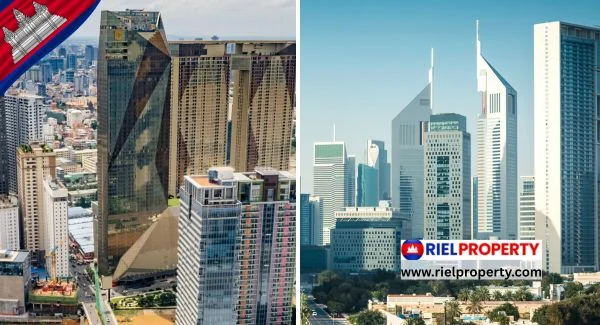
Gulf-based investors have spent the past decade building some of the most impressive private real estate portfolios in the world. Dubai, Abu Dhabi, Riyadh, London, and select European capitals have formed the core of what might reasonably be called the “Golden Square” of HNW and family office property allocation: tax-free, liquid, globally recognised, and denominated in currencies that track the US dollar. The performance has been exceptional. Dubai’s prime districts have continued posting mid-to-high single-digit annual price growth. Yields in established submarkets remain in the 5%-7% gross range. The case for GCC property as a foundation asset is not in question.
Dubai has delivered exceptional real estate returns, and most Gulf family offices know it. The real question is no longer whether Dubai works as a core holding, but whether a portfolio heavily weighted towards Dubai, GCC assets, and correlated Western markets is the right structure for the next decade. Concentration risk is rarely examined during periods of strong performance, but it compounds quietly. Cambodia is emerging as a specific and well-reasoned answer to that challenge, not as a replacement for Dubai, but as an ASEAN satellite: a USD-denominated, high-yield allocation in one of Asia’s fastest-growing economies that moves to a completely different cycle.
At a Glance: Cambodia vs. Dubai for the Gulf Investor
| Factor | Dubai | Phnom Penh |
|---|---|---|
| Gross Rental Yield | 5–7% | 7–9% (up to 12% coastal) |
| Net Yield (after costs) | 4–6% | 6–8% |
| Transaction Currency | USD / AED (pegged) | USD |
| Entry Price (1BR central) | $250,000–$600,000+ | From $60,000–$150,000 |
| GDP Growth (2024) | ~4% | ~6.1% |
| Foreign Ownership | Designated freehold zones | Freehold strata title (condos) |
| Market Cycle Correlation | GCC / global rates | ASEAN / independent cycle |
| Portfolio Role | Trophy, appreciation, liquidity | Yield, USD cashflow, diversification |
Jump to: Concentration Risk | The USD Factor | Yield Arbitrage | The BRI Play | Legal Framework | Portfolio Allocation
The Concentration Problem in GCC-Heavy Portfolios
Most Gulf family office real estate portfolios share a structural characteristic that is rarely examined critically during periods of strong performance: they are heavily concentrated in a single economic bloc. A portfolio with primary positions in Dubai and Abu Dhabi, a secondary leg in London or Geneva, and perhaps a smaller allocation into Riyadh is, in correlation terms, almost entirely exposed to the same set of macro drivers: global interest rates, Western liquidity cycles, and the performance of GCC economies.
That correlation was not a problem during the post-2020 Dubai repricing cycle, when everything worked simultaneously and in the same direction. But the function of a well-structured portfolio is not to maximise returns in the best conditions. It is to protect and grow capital across a range of conditions, including those that are not currently visible. A portfolio that is entirely correlated with GCC and Western cycles carries meaningful exposure to any scenario in which those cycles turn unfavourable simultaneously.
ASEAN is a different orbit entirely. Tourism, manufacturing, agricultural exports, and a growing domestic consumption base drive Cambodia’s economy. It is influenced by Chinese capital flows, regional trade dynamics, and the pace of ASEAN integration far more than by US Federal Reserve decisions or European monetary policy. Adding a Cambodia allocation to a GCC-heavy portfolio does not just add yield. It adds genuine geographic and cyclical diversification, which is what family offices are supposed to be doing with cross-border allocations.
The USD Factor: Cambodia as a Dollar Asset in a Different Economy
GCC investors think in US dollars by default. The Saudi riyal is pegged at 3.75 SAR per USD. The UAE dirham is pegged at 3.67 AED per USD. Similar fixed arrangements govern most other Gulf currencies. For a family office operating out of Dubai or Riyadh, deploying capital into a USD-denominated asset is not a currency decision at all. It is the natural state of portfolio management.
Cambodia is one of the most thoroughly dollarised economies in Asia. Condominium sales, prime market rental contracts, and most significant commercial transactions in Phnom Penh are quoted and settled in US dollars. The country maintains a hybrid monetary system in which the riel circulates alongside the dollar for smaller transactions. Still, for international property investment, Cambodia operates in a USD market. There is no currency conversion required, no exchange rate risk to model, and no FX layer between a Gulf investor’s capital and their Cambodian rental income.
Compare this with deploying capital into euro-denominated European assets or GBP-priced London property, where currency volatility adds a separate and often unpredictable dimension to return modelling. A Cambodia allocation allows a Gulf investor to keep capital aligned with the dollar peg while accessing a completely different economic cycle, at yields that the dollar-denominated GCC market no longer offers at comparable price points.
The Yield Arbitrage: What 200 Basis Points Means at Scale
The yield conversation is where Cambodia’s case becomes most concrete for family office capital. Dubai has been one of the world’s best-performing real estate markets over the past four years, and that performance has done what strong capital appreciation always does: compress yields. Prime district residential assets in Dubai that were generating 7% to 8% gross yields in 2020 are now more commonly trading at 5% to 7% as purchase prices have risen faster than rents. After realistic deductions for service charges, management fees, and vacancy periods, many family offices are now modelling Dubai net yields in the 4%-6% range for stabilised residential assets.
Cambodia’s gross yields remain structurally higher. The national average gross apartment yield in Cambodia was approximately 7.4% in Q1 2025. Phnom Penh’s prime districts range from approximately 5% in the most competitive segments to 8.5% in well-selected buildings, with some projects offering guaranteed returns of 8% for three years on specific configurations. After the same 1.5% to 2% deduction for management, maintenance, and vacancy, net yields on carefully chosen Phnom Penh assets sit in the 6% to 8% range. That is approximately 200 basis points above what comparable family office portfolios are currently modelling for core Dubai residential.
At the scale at which Gulf family offices typically operate, 200 basis points is not a rounding difference. It is a material impact on annual income generation.
| Allocation Size | At 6% Net (Cambodia) | At 8% Net (Cambodia) | vs. 4% Net (Dubai core) |
|---|---|---|---|
| $1,000,000 USD | $60,000 / yr | $80,000 / yr | $40,000 / yr |
| $3,000,000 USD | $180,000 / yr | $240,000 / yr | $120,000 / yr |
| $5,000,000 USD | $300,000 / yr | $400,000 / yr | $200,000 / yr |
| $10,000,000 USD | $600,000 / yr | $800,000 / yr | $400,000 / yr |
A 20% to 30% reallocation of a mid-sized family office real estate portfolio into Cambodia-grade yields does not require exiting Dubai positions. It requires adding a satellite allocation that lifts the blended portfolio yield while introducing a non-correlated economic exposure. That is the rational structure for a portfolio built to perform across cycles rather than just in the current one.
The Belt and Road Play: Capturing Chinese Infrastructure Capital Without Chinese Asset Risk
Gulf family offices are sophisticated consumers of the Belt and Road narrative. The BRI, as a Chinese foreign policy and infrastructure export programme, is well understood in regional HNW circles. What is less frequently discussed is the specific and measurable impact BRI capital has had on Cambodia’s real economy, and what that means for property investors positioning themselves in the country now.
Over the past decade, Chinese-backed investment into Cambodia has funded highways connecting Phnom Penh to Sihanoukville, special economic zones along key logistics corridors, upgraded port infrastructure, and power generation capacity that has fundamentally improved Cambodia’s ability to attract manufacturing and tourism investment. The synergy between the BRI and Cambodia’s national development strategy, domestically known as the Pentagon Strategy, has produced infrastructure improvements that would have taken significantly longer to materialise without foreign capital.
The Phnom Penh to Sihanoukville expressway, completed with Chinese financing, has cut travel time between the capital and the coast from several hours to under two. That single infrastructure improvement has materially changed the investment case for coastal real estate. Techo International Airport, under construction south of Phnom Penh, will add international connectivity, further supporting both tourism recovery and the expatriate tenant base that drives urban rental demand.
For a Gulf investor, this creates a specific and attractive positioning: exposure to the economic benefits of Chinese infrastructure capital flowing into Cambodia, without direct on-balance-sheet exposure to mainland Chinese property or Chinese capital markets. Cambodia captures the upside of BRI’s infrastructure and connectivity agenda without the political, regulatory, and liquidity risks that direct Chinese investment carries for international family offices in the current environment. That is, in essence, a China-Plus-One real asset play, and it is available at price points and yields that the Chinese real estate market itself has not offered for many years.
Legal Framework and Ownership Structure for Gulf Investors
Foreign nationals, including UAE and Saudi Arabian investors, can hold freehold strata title to condominium units in Cambodia under the foreign ownership law introduced in 2010. The framework allows foreigners to own units above the ground floor in condominium buildings where foreign ownership does not exceed 70% of the total floor area. The title is registered, the ownership structure is comparable in concept to apartment ownership in Dubai’s designated freehold zones, and transactions are conducted entirely in US dollars.
Direct land ownership is not available to foreign nationals. For investors whose strategy extends to landed property or commercial real estate, long-term lease structures and company arrangements are used. Still, these carry different legal and risk profiles and require specialist local legal advice. For most Gulf family office allocations into the Cambodian condominium market, the strata title route is clean, legally straightforward, and well-understood by the developer, legal, and banking ecosystem that serves international buyers in Phnom Penh.
Cambodia does not impose restrictions on capital repatriation for foreign investors. Rental income and sale proceeds can be transferred back through the banking system in US dollars, which removes one of the practical concerns that complicates investment in other frontier and emerging markets in the region.
Purchasing property in Cambodia does not automatically confer residency. Still, Cambodia’s business visa system allows indefinite renewal, effectively permitting long-term residence for investors who wish to maintain a presence in the country. For family office principals who travel regionally and want a Southeast Asian base, Phnom Penh’s improving international connectivity, low cost of living, and established expatriate infrastructure provide a practical and low-friction environment.
Structuring a Cambodia Allocation: Practical Considerations for Gulf Investors
For Gulf-based HNW and family office investors approaching Cambodia for the first time, the most common practical question is not whether the market makes sense but how to size and structure the allocation sensibly within an existing portfolio.
A 10% to 20% allocation of a real estate portfolio into Cambodia is a position that adds meaningful yield uplift and genuine geographic diversification without creating excessive concentration in a single emerging market. At this weighting, the Cambodia allocation functions as a yield engine, generating above-market income that partially offsets the lower yields on larger GCC and European positions, while maintaining exposure to the appreciation potential of Phnom Penh’s developing urban property market.
At a larger scale, the diversification within Cambodia itself becomes a consideration. Phnom Penh’s BKK1 district offers depth in urban rentals and strong tenant quality. BKK3 and the wider Chamkarmon area offer comparable location characteristics at lower entry prices and stronger yield-on-cost metrics. Sihanoukville provides coastal and tourism-driven returns that move to a different occupancy cycle from the capital city market. A portfolio spread across two or three of these sub-markets carries less single-district risk than a concentrated position in one area.
Current Projects Available Through Riel Property
For Gulf investors actively evaluating their first or subsequent Cambodia allocation, Riel Property provides structured, investor-grade project intelligence and end-to-end purchase support specifically designed for international buyers operating remotely. The platform is built by foreign investors, for foreign investors, with a service model that covers unit selection, legal coordination, remote purchase pathways, handover management, and ongoing ownership support after the sale.
Current listings include options across the full investment spectrum relevant to Gulf buyers:
- Immediate income, BKK1: Time Square 302, near-completed BKK1 tower with exclusive resale units available through Riel Property. Ready to rent, prime district, 6–8% gross yield on BKK1 comparables.
- Branded hospitality, BKK1: UC88 Wyndham Garden, delivering September 2026, combining international hotel brand infrastructure with freehold residential ownership in Phnom Penh’s premium district.
- Pre-launch BKK1 at discount: Time Square 9 Gatsby, 36-floor art deco tower priced at approximately $1,700 per square metre, representing a 30% to 50% discount to comparable completed BKK1 stock, from $88,000 USD.
- Value entry, central BKK3: Time Square 11, from approximately $45,000 USD, fully furnished freehold units with a 35-month staged payment structure, five minutes from BKK1.
- Landmark luxury, BKK1: Gato Tower, 67-floor mixed-use tower on Norodom Boulevard, Japanese-Cambodian backed, with exclusive resale units available through Riel Property.
- Ultra-premium, Tonle Bassac: J Tower 3, Phnom Penh’s tallest residential building at 77 floors, 70% sold, with exclusive resale access and hard title ownership.
The Strategic Summary: Cambodia’s Role in a Gulf Portfolio
The framing that serves Gulf investors best is not Cambodia versus Dubai. It is Cambodia, alongside Dubai, performing a specific function in a portfolio deliberately constructed to work across multiple economic cycles and geographies.
Dubai provides what it has always provided: trophy assets, strong liquidity, global recognition, and a tax-free environment that Gulf investors know and understand. Cambodia provides what Dubai’s current pricing no longer delivers at the same level: structurally high yields, entry prices that allow meaningful diversification without excessive concentration, exposure to ASEAN’s fastest-growing economies, and a USD-denominated market that fits naturally within the dollar-aligned worldview of Gulf capital.
The macro drivers supporting Cambodia’s medium-term trajectory, including 6%+ GDP growth, BRI infrastructure investment, recovering international tourism, and a deepening expatriate tenant base in Phnom Penh, are largely independent of the factors that will determine Dubai’s next cycle. That independence is not incidental. It is the point.
For Gulf family offices whose portfolios are built to generate income, preserve capital, and grow wealth across decades rather than quarters, Cambodia represents the kind of rational, data-supported diversification that the best-constructed portfolios include before the opportunity becomes obvious to the broader market.
To access verified project data, yield modelling, and end-to-end purchase support for Cambodia allocations, visit Riel Property and speak directly with the team.

Thomas Kaspersky
I’m Thomas Kaspersky, specialising in property investment across several markets, including Cambodia, the UK, Dubai/UAE, and Poland. With experience as an engineer and project manager, I enjoy explaining how developments, construction, and market data shape real estate opportunities.
View all posts