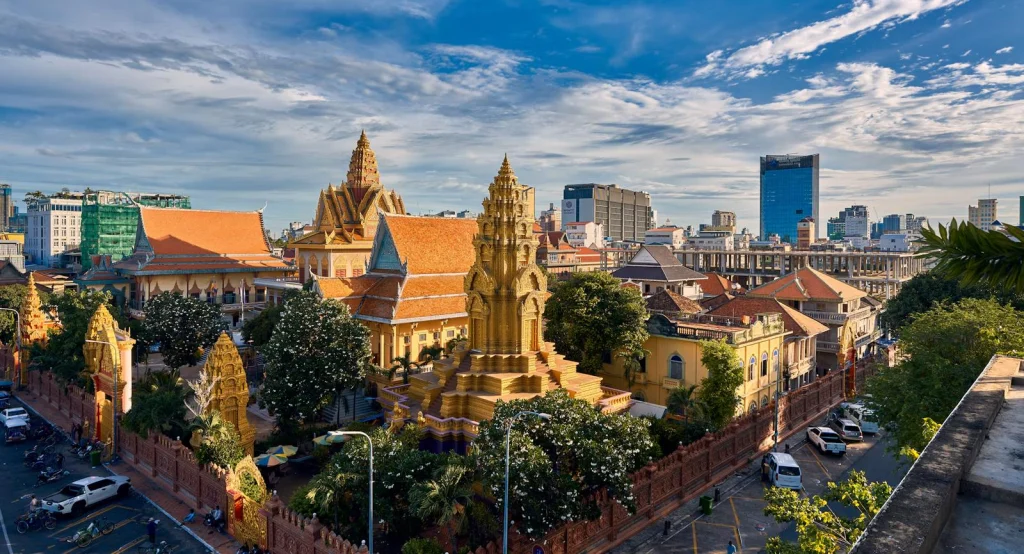
Cambodia has quietly become one of Southeast Asia’s more practical places to retire. The retirement visa is simple and renewable, everyday life runs on the US dollar, and a modern condo in Phnom Penh or on the coast costs a fraction of what a comparable home would cost in most Western cities. For retirees who have found Thailand’s long-stay rules and banking requirements harder in recent years, it is a natural place to compare.
Retirement is a long-term decision, though, and Cambodia has real gaps, especially in healthcare for serious conditions. The people who retire here happily tend to be the ones who planned for those gaps before they arrived.
This guide explains the retirement visa, healthcare and insurance, everyday costs, the best places to live, whether to rent or buy, and a realistic timeline for making the move.
The ER retirement visa
Retirees arrive on a $35 E-class (Ordinary) visa, available on arrival or online, and then apply in-country for an ER retirement extension. Do not enter on a tourist visa, because it cannot be converted.
- Who qualifies: retirees aged 55 and over who are not working. Younger applicants are decided case by case.
- Documents: passport, photo, proof of retirement such as a pension or social security letter, and proof of funds such as recent bank or pension statements.
- Length: 1, 3, 6 or 12 months, renewable indefinitely. The 6 and 12-month options allow multiple entries.
- Cost: around $275 to $300 for 12 months through an agent.
- Minimum funds: no official minimum deposit is published, unlike Thailand’s retirement visa.
ER holders cannot work. Your landlord must also register you as a foreign resident, so make sure this is done when you move in, as missing registration can delay renewals.
Healthcare and insurance
Healthcare is the most important thing to plan. Phnom Penh has several good private hospitals and clinics used by expats, including Royal Phnom Penh Hospital, which is managed by Thailand’s Bangkok Dusit Medical Services group, as well as international clinics for routine care. Outside the capital, options are more limited.
For complex treatment, many retirees fly to Bangkok or Singapore. That makes international health insurance with medical evacuation cover essential, not optional. Arrange it before you move, since cover becomes harder and more expensive to obtain with age and existing conditions.
Choosing a home near the better hospitals is also worth considering. Central districts such as BKK1, Toul Kork and Daun Penh are well placed for both hospitals and the airport.
Cost of living for retirees
Day-to-day costs in Phnom Penh are lower than in most Western cities and generally below Bangkok. Local food, transport and domestic help are inexpensive. Imported groceries, wine and international brands cost more, as does good health insurance, which is often the biggest single expense for older retirees.
Because prices are in dollars, retirees with US dollar income avoid currency swings. Those with pensions in pounds, euros or Australian dollars should allow a margin for exchange rate changes. Our rental cost guide shows typical rents by district if you plan to rent first.
Banking and receiving your pension
Opening a bank account in Cambodia is usually straightforward with a passport, a valid visa or extension and proof of address such as a lease. Major banks offer US dollar accounts, mobile banking and QR payments, and many retirees keep a home-country account for their pension alongside a local dollar account for daily spending.
Check how your pension provider pays overseas, what fees apply, and whether it can pay directly into a Cambodian account. Some state pensions are paid abroad without annual increases in certain countries, so confirm this with your pension authority before you move. Keep a cash buffer for the first few months while accounts and transfers are set up.
Retirees often ask us which buildings are easiest to live in day to day, and the Riel Property team can share practical details such as management quality, backup power and nearby clinics.
Where retirees choose to live
- Phnom Penh, BKK1 and Daun Penh: central, walkable, close to hospitals, restaurants and the riverside.
- BKK3 and Toul Tom Poung: quieter streets, cafes and the Russian Market, popular with long-stayers.
- Koh Pich and Chroy Changvar: newer districts with river views and more space.
- Kampot and Kep: slower, greener coastal towns, but further from major hospitals.
- Sihanoukville: beach access and modern condos, with growing services and a short ferry ride to the islands.
Our guide to Phnom Penh property districts compares the city’s neighborhoods in more detail.
Should you rent or buy?
Most retirees are better off renting for six to twelve months first. It lets you test the climate, the neighborhood and the healthcare before committing. After that, buying can make sense: you fix your housing cost, choose a building with the services you want, and own an asset priced in dollars.
Foreigners can own condo units freehold on strata title, from the first floor up and within a 70% foreign limit per building. Retirees often prefer ready condos they can move into straight away, with lifts, security, backup power and on-site management. Others buy off-plan a few years before they plan to move, paying in stages while the building is finished. Our guides to the cost of buying property and property titles cover the details, and many sellers accept bank transfer, cash or crypto, as our crypto buying guide explains.
When choosing a building for retirement, look beyond the price. Check lift reliability, backup generators, accessibility, the quality of building management and how far you are from a good hospital.
Planning for your heirs
A strata title can be inherited, but it pays to plan ahead. Make a will that covers your Cambodian property, keep copies of your title and contract with your family, and ask a local lawyer how a transfer to your heirs would work. If your heirs are foreign, the 70% foreign limit in the building still applies to the transfer.
A realistic 6-month moving timeline
- Before you go: arrange international health insurance with evacuation cover, gather pension letters and bank statements, and decide what to ship.
- Month 1: arrive on an E-class visa, rent a serviced apartment, and register with a clinic.
- Month 2: apply for a 12-month ER extension and open a local dollar bank account.
- Months 3 to 5: explore neighborhoods, view buildings and talk to other retirees.
- Month 6: sign a longer lease or reserve a condo. On a ready unit, the strata title transfer usually takes around 12 weeks.
Riel Property helps retirees find buildings that suit later life, with good management and easy access to healthcare, and can arrange viewings around your schedule. See our investment guides if you plan to rent part of the year, and our guide to moving from Thailand to Cambodia if you are relocating from there. If you are selling a home to fund the move, specialist buyers such as Quick House Buyer in the UK and Sell Property Fast in the UAE can speed up that step.
Free download: The Cambodia Property Guide 2026 covers ownership rules, costs and taxes, off-plan buying, visas, where to buy and realistic returns in one 22-page PDF.
Frequently asked questions
What is the retirement visa in Cambodia?
Retirees aged 55 and over enter on an E-class visa and apply for an ER retirement extension of 1, 3, 6 or 12 months, renewable indefinitely. A 12-month extension costs around $275 to $300 through an agent.
Is there a minimum income or deposit for retiring in Cambodia?
No official minimum is published. You need proof of retirement, such as a pension letter, and proof of funds, such as bank or pension statements.
Is healthcare in Cambodia good enough for retirees?
Phnom Penh has good private hospitals and clinics for routine care, but serious treatment often means traveling to Bangkok or Singapore. International health insurance with evacuation cover is essential.
Can retirees buy property in Cambodia?
Yes. Foreign retirees can own condo units freehold on strata title, from the first floor up and within a 70% foreign limit per building.
Can a retiree work in Cambodia?
Not on a retirement extension. Anyone who wants to work needs a business extension and a work permit.
Is Cambodia cheaper than Thailand for retirement?
Day-to-day costs and property prices in Phnom Penh are generally lower than in Bangkok, and the retirement visa has no published minimum deposit. Healthcare is more limited, so budget well for insurance.

Thomas Kaspersky
I’m Thomas Kaspersky, specialising in property investment across several markets, including Cambodia, the UK, Dubai/UAE, and Poland. With experience as an engineer and project manager, I enjoy explaining how developments, construction, and market data shape real estate opportunities.
View all posts